“Vision is the art of seeing what is invisible to others.”
When cataracts develop, this art slowly fades. Cataract surgery is one of the most commonly performed and successful medical procedures worldwide, restoring clear vision to millions every year. According to global ophthalmology data, cataracts remain the leading cause of reversible blindness, especially in people above the age of 50. Fortunately, modern cataract surgery is safe, quick, and highly effective.
This article explains what cataract surgery is, how it is performed, its benefits, and what recovery looks like, in clear and patient-friendly language.
What Is a Cataract?
A cataract occurs when the natural lens of the eye becomes cloudy. The lens is normally clear and helps focus light onto the retina for sharp vision. With age or other risk factors, proteins in the lens begin to clump together, leading to blurred or dim vision.
Common Symptoms of Cataract
- Blurry or foggy vision
- Difficulty seeing at night
- Sensitivity to light or glare
- Faded or yellowish colors
- Frequent change in glasses
When cataracts start affecting daily activities, surgery becomes the recommended treatment at Brar Eye Hospital.
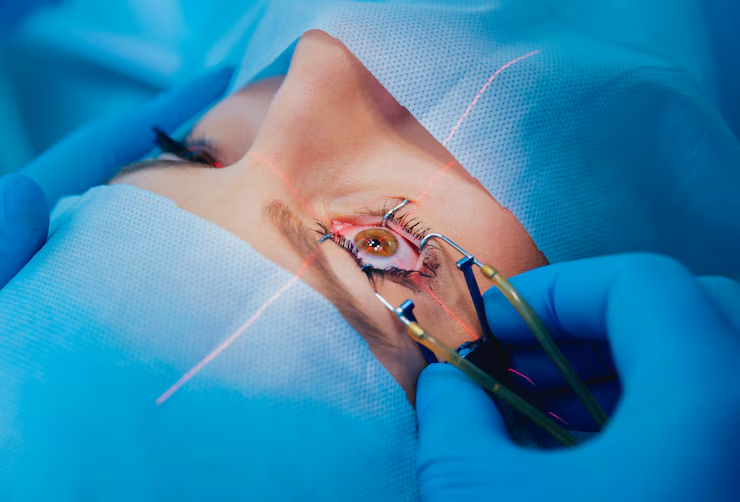
What Is Cataract Surgery?
Cataract surgery is a medical procedure in which the cloudy natural lens is removed and replaced with a clear artificial lens, known as an Intraocular Lens (IOL). This allows light to pass through the eye normally again, restoring vision.
✔ Painless Procedure
✔ Local Anesthesia
✔ 15–20 Minutes Duration
✔ Same-Day Recovery
Cataract Surgery Procedure: Step-by-Step
1
Pre-Surgery Preparation
Before surgery, the eye is thoroughly examined, and measurements are taken to select the correct lens power. Eye drops are used to numb the eye.
2
Removal of the Cloudy Lens
In modern cataract surgery, a small incision is made, and ultrasound energy is used to break the cloudy lens into tiny pieces. These pieces are gently removed.
3
Insertion of the Artificial Lens
A foldable intraocular lens is inserted through the same small incision and placed securely inside the eye.
4
Completion
The incision usually heals on its own without stitches. The eye is protected with a shield after surgery.
Types of Cataract Surgery
- Phacoemulsification: Most common and advanced method used at our state-of-the-art facility.
- Laser-Assisted Cataract Surgery: Uses laser for higher precision.
- Conventional Surgery: Used in advanced or complicated cases.
Benefits of Cataract Surgery
Cataract surgery offers life-changing benefits, including:
Clear & Sharp Vision
Regain the ability to see details clearly.
Improved Night Vision
Reduced glares and halos around lights.
Better Color Perception
Colors appear vivid and bright again.
Enhanced Quality of Life
Independence in daily activities like driving and reading.
Recovery After Cataract Surgery
Recovery is usually smooth and fast. Vision starts improving within 24–72 hours, though complete healing takes about 4–6 weeks.
Recovery Care Tips
- Use prescribed eye drops regularly
- Avoid rubbing the eye
- Protect the eye from dust and water
- Avoid heavy lifting for a short period
Faster Visual Recovery and Comfort in 2026
Advances in cataract surgery are increasingly centred on how recovery feels, not just on visual results. By 2026, progress is expected to come from thoughtful refinements rather than dramatic change.
- Techniques prioritise comfort: Surgical refinements focus on reducing tissue stress and inflammation.
- Personalised Recovery: Visual stabilisation is often quicker as medication plans are increasingly tailored.
- Predictability: We prioritise consistent healing so expectations remain clear and confidence builds naturally.
What Will Not Change in Cataract Surgery
Despite ongoing innovation, the core principles remain consistent. We continue to rely on careful assessment, surgical skill, and personalised planning. Reliable improvement develops over time and reflects real clinical practice. We remain focused on safety, clarity, and long-term outcomes above all else.
Is Cataract Surgery Safe?
Yes. Cataract surgery is considered one of the safest surgeries in modern medicine. Complications are rare when the procedure is performed by experienced eye specialists and post-operative instructions are followed properly.
Who Should Get Cataract Surgery?
The decision is based on vision impact, not age alone. It is recommended when vision interferes with daily life, glasses no longer help, or driving and working becomes difficult.
Frequently Asked Questions
Q1. Is cataract surgery painful?
No, the procedure is painless due to local anesthesia and numbing eye drops.
Q2. How long does cataract surgery take?
The surgery usually takes 15–20 minutes.
Q3. Can cataracts come back after surgery?
No, cataracts do not return once the natural lens is replaced with an artificial one.
Q4. When can I resume daily activities?
Most normal activities can be resumed within a few days, following your doctor's guidance.
Conclusion
Cataract surgery is a simple yet powerful solution to vision loss. With modern techniques, minimal discomfort, and rapid recovery, it allows people to regain visual clarity and confidence. Timely cataract surgery restores both your vision and your way of life.