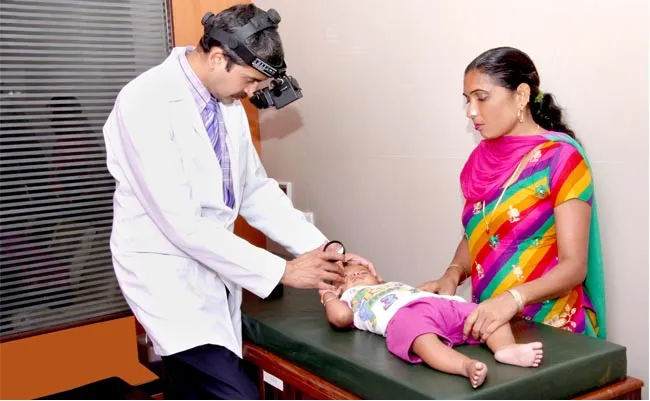
Children may not complain if they do not see out of one or both eyes. Sometimes the only clue may be poor performance in school as well viewing the blackboard at a very close distance. Hence all children need regular eye checkups at the time of starting school and right through their school years. Of the many eye problems in children, the most important are refractive errors, squint and amblyopia.
Adult patients suffering from squint and double vision are also examined and treated effectively.
Paediatric Ophthalmology is a branch of Ophthalmology that deals with the treatment of eye diseases in children aged 16 years and below.
Because the type of eye diseases that affect children are unlike those affecting adults and treatment methods required for children are also quite different. Moreover, eye specialists for children are distinctive and trained especially for their treatment.
A child should go for an eye checkup if the following symptoms are noticeable:
Crossed eyes
Keeps object close to his eyes
Not being able to see the blackboard at school
Things looking blurry or funny
Feeling an itching, burning or scratchy sensation in the eyes
Injury to the eye
One or both the parents wear glasses
It is recommended to have an eye check up even in a seemingly ‘normal child’ between the age of 7 and 16 years regularly.
Although any eye disease that affects an adult can affect a child’s eye; some of the most common diseases are:
Refractive errors
Lazy eye disease
Eye injuries
Squinting of eyes
Watering from the eyes
Eye allergies
This is a common eye disease affecting nearly 5-10% of children. In this disease a child cannot see well from one or both eyes due to uncorrected refractive error or squint.
Unfortunately, Lazy Eye Disease goes undetected as, children do not complain and parents do not realize it. Appropriate treatment at the correct time can restore good vision.
Do not put any eye drop especially the ones with Steroids. Washing the eye with plenty of water will wash off any foreign body or allergic material. Consult a Paediatric Ophthalmologist as soon as possible if the redness persists or if the eye is sore.
Your child may be afraid of an eye exam and may not cooperate but you can help by telling your child what to expect e.g. there won’t be any shots, the doctor may put drops in his eyes and that the drops may sting for a few seconds and the vision may get a little blurry but this will go away shortly. The doctor will shine a light in the eyes to see inside them. The doctor may ask the child to name pictures or letters or point to things. He may ask to wear special glasses or sit on a big machine.
Pay attention to your child’s eyes and behavior. Call the doctor if you notice a problem or if your child complains and have your child’s eyes checked at 6 months, 3 years and 5 years intervals and at least once between the ages of 7 and 18. Correcting vision problems early is the best way to take care of your child’s sight.
Unusual behavior can sometimes be a sign of an eye problem. Watch your child for the following warning signals: Closing one eye or turning or tilting the head to see things.